The Ultimate Checklist for Choosing Repair Shop CRM Software in India

Introduction: The Digital Shift in India’s Repair Industry
In the bustling markets of Delhi, the tech hubs of Bangalore, and the commercial streets of Mumbai, the repair industry is undergoing a massive transformation. Whether you are running a mobile repair shop, a multi-brand automobile garage, or a consumer electronics service center, the days of relying on dusty ledgers and manual job cards are fading. As India moves towards a more organized retail and service sector, the need for a specialized Customer Relationship Management (CRM) system has never been more critical.
Choosing the right CRM isn't just about digitizing your records; it’s about improving efficiency, ensuring GST compliance, and building long-term trust with your customers. This comprehensive checklist will guide you through the essential features and considerations for selecting the best repair shop CRM software tailored for the Indian market.
1. GST-Compliant Billing and Invoicing
In India, GST compliance is the backbone of any legal business operation. A generic CRM might offer basic invoicing, but a repair shop in India needs software that understands the nuances of CGST, SGST, and IGST. Your chosen software should allow you to:
- Generate GST-compliant tax invoices and proforma invoices.
- Handle different tax slabs for services versus spare parts.
- Automate HSN code mapping for various components.
- Easily export reports for GST filing (GSTR-1, GSTR-3B).
Without these features, your accounting team will spend hours manually reconciling data, increasing the risk of errors and legal complications.
2. Comprehensive Job Card Management
The job card is the heart of any repair business. It tracks the journey of a device or vehicle from the moment it enters the shop until it is returned to the customer. A robust CRM should provide a digital job card system that captures:
- Customer Details: Name, contact, and history.
- Item Details: Make, model, serial number (IMEI/VIN), and physical condition (with photo uploads).
- Problem Description: Customer complaints and technician observations.
- Status Tracking: Pending, In-Progress, Awaiting Parts, Completed, or Delivered.
Real-time status updates allow you to manage your workflow effectively and provide accurate timelines to your clients.
3. Inventory and Spare Parts Management
Inventory leakage is one of the biggest causes of revenue loss in Indian repair shops. Whether it’s a smartphone screen or a car's brake pad, you need to know exactly what you have in stock. Your CRM should offer:
- Low-Stock Alerts: Automated notifications when critical parts are running low.
- Multi-Location Support: If you have multiple branches, you should be able to track inventory across all locations.
- Serial Number Tracking: Essential for managing warranties on spare parts.
- Purchase Order Management: Streamline the process of ordering new stock from vendors.
4. WhatsApp and SMS Integration
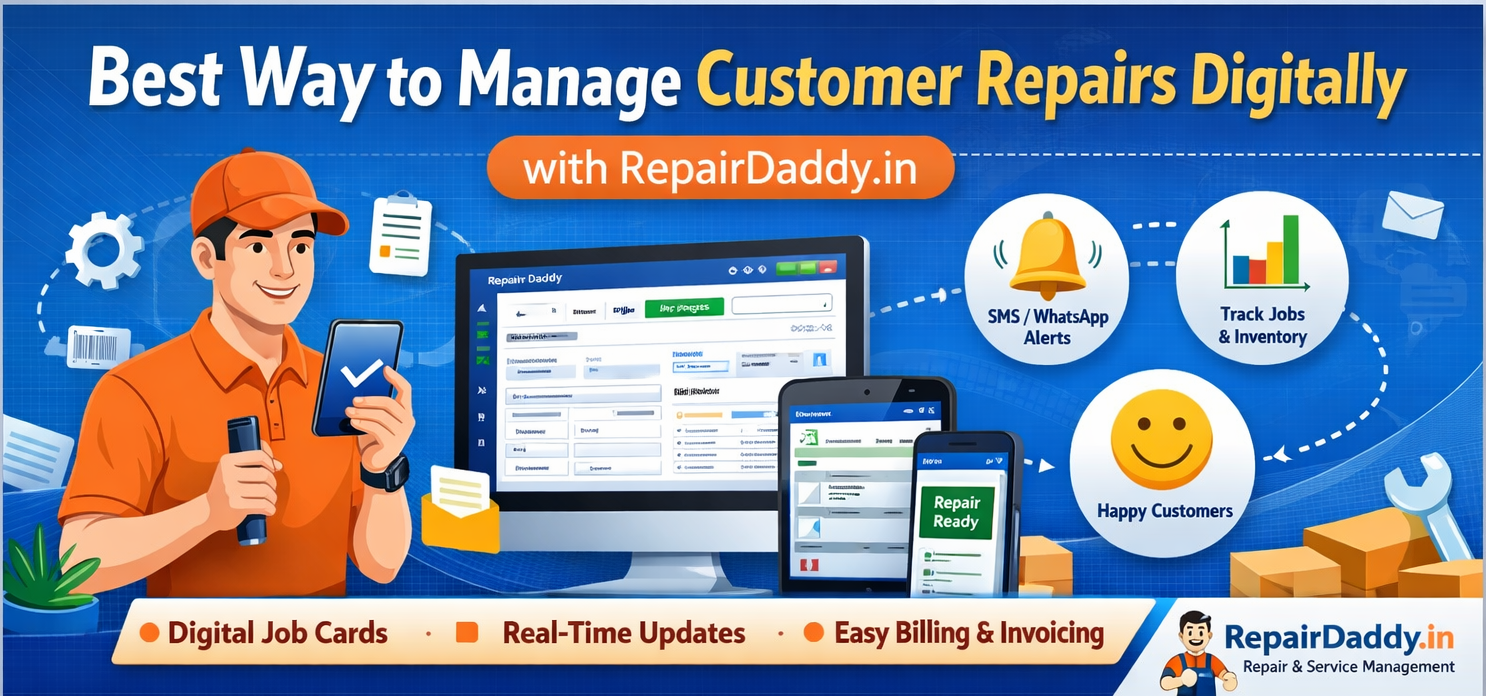
In India, WhatsApp is the primary mode of communication. While email is professional, a WhatsApp message is far more likely to be read instantly. The ultimate CRM must integrate with WhatsApp Business API or SMS gateways to send automated updates for:
- Job card creation alerts.
- Estimated repair costs and approval requests.
- Notification when the repair is completed.
- Payment links and digital receipts.
This transparency reduces the number of follow-up calls your staff has to handle and significantly improves the customer experience.
5. Technician Management and Performance Tracking
Managing a team of technicians requires visibility into their productivity. A good CRM allows you to assign specific job cards to individual technicians and track their performance. Key features include:
- Technician Dashboards: Where they can see their assigned tasks and update statuses.
- Incentive Calculation: Automatically calculate commissions or bonuses based on completed repairs.
- Time Tracking: Monitor how long a technician takes to complete a specific type of repair to identify training needs.
6. Indian Payment Gateway Integration
With the UPI revolution, customers expect to pay via PhonePe, Google Pay, or Paytm effortlessly. Your CRM should integrate with Indian payment gateways like Razorpay, Cashfree, or Instamojo. This allows you to:
- Send payment links directly to the customer’s phone.
- Accept partial payments or advances.
- Automatically mark invoices as 'Paid' once the transaction is successful.
7. Cloud-Based Accessibility and Security
In a mobile-first nation, you shouldn't be tied to a desktop in your shop. A cloud-based CRM allows you to check your business performance from your smartphone while you are on the go. However, with cloud storage comes the responsibility of data security. Ensure the software offers:
- Data Encryption: Protecting sensitive customer information.
- Role-Based Access Control: Ensure that your staff can only see the information they need to do their jobs.
- Regular Backups: To prevent data loss in case of hardware failure.
8. Local Support and Training
No matter how intuitive the software is, you will eventually need support. When choosing a CRM provider, check if they have a dedicated support team in India. Consider the following:
- Do they offer support in regional languages?
- Is there a training module for your staff?
- What is their typical turnaround time for resolving technical issues?
A local provider who understands the Indian business landscape will always be more valuable than a generic global alternative.
9. Scalability and Pricing Models
Your business won't stay the same size forever. You need a CRM that grows with you. Look for flexible pricing models—usually SaaS (Software as a Service)—where you pay a monthly or annual subscription fee. Avoid software that requires a massive upfront investment and offers no updates. Ensure the software can handle an increasing number of job cards, customers, and even new branch locations without a significant drop in performance.
Conclusion: Making the Right Choice
Choosing the right repair shop CRM in India is a strategic decision that affects every aspect of your business, from the technician's workbench to the accountant's desk. By focusing on GST compliance, WhatsApp automation, and robust inventory tracking, you can streamline your operations and focus on what you do best: providing excellent repair services.
Take your time to demo different platforms, involve your lead technicians in the decision-making process, and choose a partner that understands the unique challenges of the Indian market. With the right tools, your repair shop can move from survival mode to a thriving, scalable enterprise.